


Online slots are among the most popular forms of digital casino entertainment. This guide walks through how they work, the types you’ll encounter, and the core concepts that shape how these games behave, based on hands-on gameplay testing and a review of published RTP and paytable information conducted in July 2026.
How Online Slots Actually Work: RNG and Randomness
Online slots run on a Random Number Generator (RNG), a computer algorithm that produces unpredictable sequences of numbers continuously, even when nobody is playing.
Each number the RNG generates corresponds to a specific position on the reels. When you press spin, the RNG selects a number at that exact moment, which determines where the reels will stop. The process takes milliseconds and has no connection to previous spins.
Every spin is independent; past results have no influence on what comes next. There is no such thing as a “hot” or “cold” machine in RNG-based slots. Slots cannot be “due” for a payout because the outcome is determined the moment you press spin, not when the reels stop.
No pattern, timing, or betting strategy can predict or influence RNG-determined results.
This randomness is fundamental to how slots work. Unlike skill-based games, the outcome can’t be shaped by player decisions beyond choosing which game to play and how much to wager.
Methodology: How this Guide was Conducted
We spent July 2026 testing roughly 40 slot games across multiple platforms—Chrome and Safari on desktop, plus iOS 16 and Android 13 on mobile devices. Our review process focused on examining paytables, checking Return to Player disclosures when operators provided them, and tracking how interfaces behaved during gameplay. We also documented which titles offered demo modes and what features players could actually access.
Disclaimer: Maple Casino is free to use. If you choose to register through a link in this table, we may receive a commission. That revenue helps fund ongoing testing and updates, and it does not influence which casinos we cover, or how they are evaluated.
Understanding Slot Mathematics: RTP, Volatility, and House Edge
Three mathematical concepts determine how a slot behaves over time: return to player (RTP), volatility, and house edge.
Return to Player (RTP)
RTP is the percentage of all wagered money that a slot is programmed to return to players over a long period. A slot with 96% RTP will theoretically return $96 for every $100 wagered across millions of spins.
It’s worth noting that RTP is calculated over millions of spins, not individual sessions. This means your personal results in a single session can vary dramatically from the stated figure.
Higher RTP generally means better long-term value, but it doesn’t guarantee short-term results. RTP includes all wins, including large jackpots that most players will never hit.
Volatility (Variance)
Slot Volatility describes how a slot distributes its payouts over time. It doesn’t affect how much the game pays back overall (that’s RTP), but it does affect how that money is spread out.
- Low volatility slots: Pay smaller wins more frequently. Your bankroll tends to decline slowly, with regular small payouts along the way. You get longer playing time, but the ceiling on any individual win is fairly low.
- High volatility slots: Pay larger wins less often. Long stretches without anything can be followed by a significant payout. These games can burn through a bankroll quickly, but they offer the potential for much bigger returns.
- Medium volatility slots: Sit between the two extremes, offering a reasonable balance of win frequency and win size.
Volatility shapes your experience quite a bit. Low volatility works well for players who want extended entertainment from a limited bankroll. High volatility suits players who are comfortable with faster losses in exchange for a shot at something bigger.
House edge
The house edge is simply the flip side of RTP. A 96% RTP slot has a 4% house edge, meaning the casino expects to keep $4 of every $100 wagered over time.
In regulated markets, the house edge is what keeps casinos profitable while still paying out wins. No betting strategy or technique can get around it in RNG-based slots.
Different Types of Slots
Slots come in a range of formats, each with its own feel and characteristics.
Classic 3-Reel Slots
Three-reel slots are the simplest format around, modelled on traditional mechanical machines. They typically feature:
- Three vertical reels with symbols
- Fewer paylines (often 1 to 5)
- Straightforward gameplay without complex bonus features
- Familiar symbols like fruits, bars, and sevens
These games suit players who prefer uncomplicated gameplay and clear win conditions.
5-Reel video slots
Five-reel slots are the most common format in online casinos. They offer:
- Five vertical reels with multiple symbols
- Multiple paylines (typically 9 to 50, sometimes more)
- Varied themes with graphics and sound effects
- Bonus features like free spins, multipliers, and interactive elements
The extra reels and paylines create more possible winning combinations, but the paytable gets more complex as a result.
Megaways slots
Megaways is a mechanic where the number of symbols appearing on each reel changes with every spin. This creates a variable number of ways to win, sometimes over 100,000 possible combinations on a single spin.
Characteristics of Megaways slots:
- Each reel displays a random number of symbols per spin (typically 2 to 7)
- The number of active paylines shifts constantly
- Wins form by matching symbols on adjacent reels, regardless of position
- Cascading reels are common, where winning symbols disappear and new ones fall into place.
They tend to be high volatility, meaning long dry spells are normal, followed by the potential for multiple consecutive wins during bonus features.
Progressive jackpot slots
Progressive slots link multiple machines (or multiple casinos) together, with a portion of each bet feeding a growing jackpot pool. The jackpot keeps climbing until someone wins, then resets to a base amount.
The jackpot can reach substantial amounts, sometimes millions of dollars. However. the odds of winning it are extremely low. Base game RTP is often lower than non-progressive slots because part of each bet funds the jackpot. Often, a maximum bet is sometimes required to qualify for the jackpot
Progressive slots offer the possibility of life-changing wins, but they come with lower overall RTP and higher volatility than standard games.
Other slot variations
- Megaspin Slots: Let you play multiple slot games at once on one screen (typically 4, 6, or 9 games simultaneously). This speeds up play considerably and increases how quickly you’re wagering money.
- Penny Slots: Allow small bets per spin, sometimes as low as one cent per payline. That said, activating all paylines can still add up to a meaningful bet per spin.
- Mobile Slots: Designed for smartphone and tablet play with touch-screen controls. Most modern titles work on both desktop and mobile, though some older games may only be available on desktop.
Real-World Testing Observations
During testing across devices and browsers, a few practical things stood out:
- Demo mode access: On iOS devices, several games required account login to access demo mode, even when the desktop versions allowed instant demo play. This varied by provider and casino platform.
- Autoplay availability: Autoplay was available on most tested games, though some providers (particularly those targeting Ontario-regulated operators) included mandatory loss-limit settings within autoplay controls.
- Paytable visibility: Paytable access was generally consistent, though the level of detail differed quite a bit. Some games displayed RTP and volatility ratings clearly; others required navigating multiple screens or omitted the information entirely.
- Load times and performance: Desktop performance was consistently smooth across tested games. Mobile performance varied, with some graphically intensive Megaways and feature-rich video slots experiencing occasional frame drops on older devices.
- Payment method context: In the Canadian market, players commonly use Interac for deposits and withdrawals. Withdrawal processing times depend on casino verification procedures and payment method, typically ranging from instant (for Interac e-Transfer at some operators) to several business days.
The Anatomy of Slot Machines: Interface Elements
Understanding slot controls helps you play confidently and avoid unintended bets.
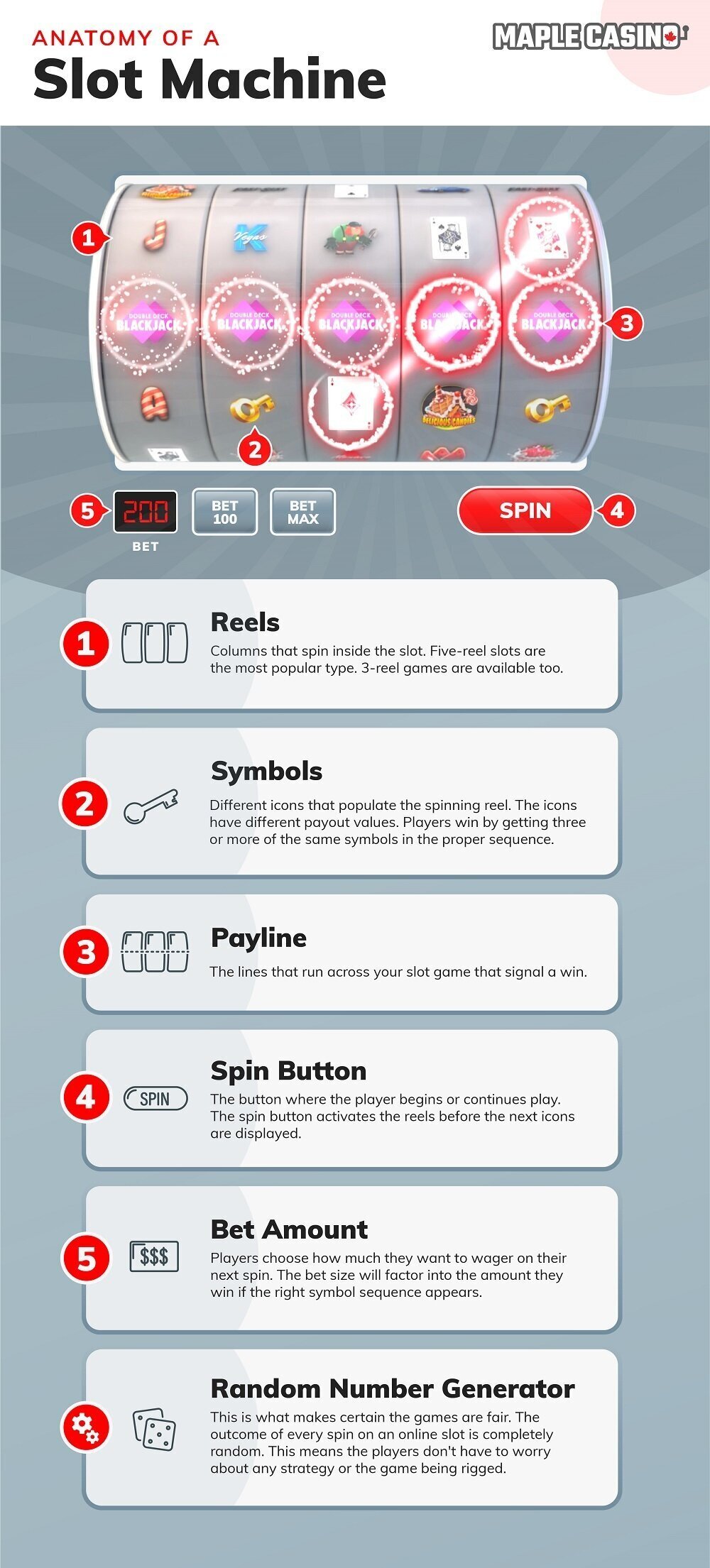
Special Symbols and Features
Pub Slots – Fruit Slots – Fruit Machines icon
A dollar coin with arrows spinning around it.
Core Principles
Ultimately, the paytable will also list the game’s maximum win (e.g., 5,000x bet), giving you a sense of its volatility. Because slots are governed by a house edge, they should always be treated as a form of paid entertainment. Approach your sessions with a set budget, and remember that no amount of technical knowledge can change the fundamental randomness of the game.
Setting Limits Before You Play
Establish clear limits before you begin:
The following ten principles help you recognize the mathematical certainties of every spin, manage your exposure, and keep gameplay within predefined limits.
1. Treat RTP as a long-term cost
As mentioned earlier, RTP is the theoretical percentage of wagered money a slot returns to players across many spins. A 96% RTP means that, statistically, $96 is returned for every $100 wagered—the remaining 4% representing the house edge.
Even modest RTP differences compound over extended sessions, so comparing these figures gives you a clearer picture of what a given game is likely to cost over time.
2. Set your budget according to game volatility
Volatility describes how frequently a slot pays out and how large those payouts tend to be.
- Low volatility: frequent but smaller wins.
- High volatility: longer losing streaks with occasional larger payouts.
Volatility does not affect RTP—it affects how your bankroll moves between wins.
Choosing a volatility level that fits both your available budget and your tolerance for extended dry spells can reduce the likelihood of depleting funds faster than intended.
3. Use demo versions to learn game behaviour
Most slots include a free demo mode that replicates real-money mechanics without financial exposure.
During demo play, you can observe how often features trigger, how quickly the game moves, how volatility patterns present in practice, and how betting structures interact with your balance—before any real money changes hands.
4. Evaluate bonuses and promotions carefully
Casino bonuses can extend session length, but they typically come attached to conditions: wagering requirements, maximum bet restrictions, game exclusions, time limits, and withdrawal caps.
A $100 bonus carrying a 35× wagering requirement, for example, means $3,500 in qualifying bets must be completed before any withdrawal is processed.
Reading these terms in full is the only way to determine whether a given promotion actually benefits your play or simply adds friction to it. 5.
5. Verify information from multiple sources
Reliable slot data generally comes from developer documentation, licensed casino disclosures, independent review platforms, and player communities.
Cross-referencing RTP figures, volatility classifications, and feature mechanics across multiple sources helps separate verified specifications from marketing language or unconfirmed claims.
6. Apply structured bankroll management
Responsible play starts with a predefined budget drawn only from discretionary funds. From there, dividing that budget into session limits, maintaining proportional bet sizes relative to your total balance, and setting clear stop-loss thresholds before each session are all practical ways to stay within defined boundaries.
Many regulated casinos also offer deposit limits, session reminders, and cooling-off periods—tools worth reviewing before play begins.
7. Only play at licensed casinos
Licensed operators are subject to regulatory requirements covering game fairness, consumer protection measures, and responsible gambling tools.
Regulators such as the UK Gambling Commission and the Malta Gaming Authority mandate verified random number generators and financial safeguards as baseline requirements. Independent testing labs—eCOGRA and iTech Labs among them—audit game fairness separately from the operators themselves.
8. Consider the reputation of game groviders
Established developers typically publish RTP values, hold regulated certifications, and submit to external audits on a recurring basis.
NetEnt, Microgaming, Playtech, Pragmatic Play, and Play’n GO are examples of providers with documented transparency practices. That transparency generally makes it easier to verify technical specifications independently.
9. Understand how game features affect variance
Free spins, multipliers, cascading reels, bonus rounds, and expanding wilds all change how and when payouts occur—and they often push a game’s effective volatility higher than its base mechanics suggest. That said, these features do not alter the overall RTP.
Understanding how a given feature set affects payout distribution can help you select games that match your preferred risk profile more accurately than volatility labels alone.
10. Treat slot play as paid entertainment
Slot outcomes are determined by random number generators, and every game carries a house edge. Prior spins have no bearing on future results. Approaching slot play as a form of paid entertainment rather than a potential income source supports realistic expectations and reduces the risk of chasing losses or exceeding pre-set limits.
Low volatility slots allow longer play time with a given bankroll. High volatility slots can deplete it quickly, but offer the potential for larger wins.
Common Myths About Slots
| Myth | The Reality |
| Slots are “Due” | Every spin is independent. The Random Number Generator has no memory of previous wins or losses. |
| Remote “Tightening” | In regulated markets, games are certified by agencies (like eCOGRA). Payout percentages (RTP) cannot be changed on a whim. |
| Higher Bets = Better Odds | Betting more increases the size of a potential win, but the probability of winning remains the same. |
| Near Misses | A “near miss” is purely visual. The RNG determined you lost the moment you hit spin; the reels just show. |
| Player’s Cards | Loyalty cards track play for rewards and bonuses only. They have zero physical or digital connection to the RNG. |
| Time of Day | Payouts are based on programmed math, not the clock. Slots do not pay better at night or during busy weekends. |
Practical Tips for Playing Slots
No strategy beats the house edge, but smart habits help you manage your bankroll and get more from each session.
Start by matching games to your goals. Low-volatility slots with small minimum bets stretch your session longer. High-volatility titles and progressive jackpots suit players chasing bigger, less frequent wins. For better long-term value, stick to games with RTP of 96% or higher.
Use demo modes before depositing. These run on the same RNG as real-money play, so you’ll get an accurate feel for pace, volatility, and bonus frequency without risking funds. If you’re playing with bonuses, read the terms carefully. Wagering requirements, game restrictions, and bet caps can block withdrawals. Treat bonuses as extended playtime, not free money.
During play, avoid progressive betting systems like Martingale (doubling your bet after every loss). Slots use independent spins, so past results don’t influence future outcomes. Doubling bets after losses drains your bankroll fast. Flat betting is safer. Take regular breaks to stay aware of your spending and keep fatigue from affecting your decisions.
FAQ
Are online slots fair and random?
Licensed casinos in regulated markets use certified random number generators tested by independent agencies like eCOGRA, iTech Labs, or GLI. These RNGs ensure outcomes are random and can’t be predicted or manipulated.Regulatory oversight varies by jurisdiction. In Ontario, iGaming Ontario licensees must meet specific fairness standards. Unlicensed operators may not follow the same practices.
Can I win real money playing online slots?
Yes, slots pay real money when you win. The house edge means most players lose money over time. Some players do win large jackpots, but those wins are exceptions. If you want to play for real money, it’s important to choose licensed and reputable platforms. Our experts regularly test and review the best online slot sites in Canada, focusing on payout reliability, game selection, and secure payment options.
What is the best slot game to play?
The most suitable slot is one you find entertaining while understanding its mathematical characteristics, such as RTP, volatility, and bonus features.The right choice depends on your priorities:
- Low volatility slots with high RTP offer longer playing time
- High volatility slots or progressives offer potential large wins
- Classic 3-reel slots provide simple gameplay
- 5-reel video slots with bonus games offer engaging features
If you’re looking for expert-tested recommendations, you can explore our reviews of 30+ online slots, where we review popular titles based on gameplay experience, payout rates, and game mechanics.
Do betting strategies work for slots?
No. Each spin is independent and random. No betting pattern can change the house edge or improve your odds. Strategies like increasing bets after losses have no mathematical advantage and can deplete your bankroll faster.
Should I always bet maximum on slots?
Not necessarily. Some older games require a maximum bet for the top jackpot, but most modern titles pay proportionally regardless of bet size. Maximum bets mean bigger wins but faster bankroll depletion. Choose a bet size that fits your bankroll and allows extended play.
How do I know if a slot has high or low volatility?
Some games state volatility in the paytable or game information. If unavailable, check the paytable structure (large gaps between small and large wins suggest high volatility), win frequency during play (long stretches without wins followed by occasional larger payouts), and game features (progressive jackpots or high-value bonus rounds typically indicate higher volatility).