


Online bingo is a luck-based game where outcomes are determined by random number generation, and no strategy can change odds or guarantee a win.
The house maintains a built-in advantage over time — typically 4% to 5% — built into ticket pricing and prize pools. No gameplay decisions reduce this edge. Card selection, timing, and betting patterns don’t change the math.
That said, understanding how online bingo works, how different variants compare, and which small factors you actually control can help you make smarter decisions about how and where to play. This guide walks through how online bingo works, what sets the variants apart, and what players can realistically expect.
Methodology: How This Guide Was Developed
This guide draws from hands-on review of online bingo rooms across platforms accessible to Canadian players. Testing covered iOS (Safari), Android (Chrome), and desktop browsers (Windows/Mac) to assess room performance across devices.
Using our review methodology, we looked at card purchase flows, auto-daub settings, chat functionality, prize split displays, and jackpot condition visibility in rooms operated by several major software providers. We also examined game rules pages, help documentation, and bonus terms where game contribution rates were specified.
What is Online Bingo?
Online bingo is the digital version of traditional hall play, available on casino websites and mobile apps. The gameplay is consistent online and offline. Players purchase cards with numbered grids, numbers are called randomly, and players mark matches until someone completes a winning pattern. However, playing online introduces functional differences that change how the game feels.
Playing bingo online vs in-person
- Auto-daub functionality: Software automatically marks called numbers, eliminating manual tracking and reducing the risk of missing numbers.
- Multi-card play: Players can purchase and play significantly more cards than practical in physical halls. Platforms typically allow 4 to 12 or more cards per session.
- Chat rooms: Many rooms include live chat for player interaction and chat-based mini-games offering small additional prizes.
- Themed variations: Online rooms often incorporate visual themes, sound effects, and bonus features similar to slots, though these don’t change underlying probability mechanics.
- Progressive jackpots: Some titles pool a portion of ticket sales into growing jackpot prizes, awarded when specific difficult patterns complete within set call limits.
Game pace, room capacity, and prize structures vary significantly between platforms and depending on the game software. Understanding these differences can help you select games that match your preferences for session length, social interaction, and prize potential.
How to Play Online Bingo
Learning how to play online bingo is straightforward, though specific interfaces and features vary between platforms. Knowing the steps makes games easier for new players to get started.
Basic gameplay steps
- Select a licensed online casino: Choose a regulated site that operates in your province and offers payment methods you can use.
- Create an account: Create an account and complete any required identity checks.
- Navigate to the bingo section: Most online casinos organize games by type. Locate the lobby, which usually displays available rooms, game variants, ticket prices, and prize information.
- Choose a bingo room: Select a game based on variant type (75-ball, 90-ball, etc.), ticket price, prize structure, and scheduled start time. Some games run continuously while others start at specific intervals.
- Purchase cards: Decide how many cards you want to play and complete the purchase. The total cost equals the price per card multiplied by the number of cards. In our testing, card purchase windows typically closed several seconds before the game starts, usually between 5 and 15 seconds depending on the platform.
- Wait for the game to start: Scheduled games begin at predetermined times. During the waiting period, you can chat with other players if the room includes that functionality. Chat rooms may have specific moderation rules that vary by platform.
- Numbers are called automatically: Once the game begins, the software randomly selects and displays numbers. With auto-daub enabled (standard in most rooms), matching numbers are marked automatically, so you don’t need to track them manually.
- If auto-daub is enabled (which is standard), matching numbers on your cards are marked automatically.
- Win by completing patterns: The first player to complete the required pattern (such as a line, four corners, or full house) wins the designated prize. When multiple players complete the pattern on the same call, winnings are typically shared among all winners, which affects the actual prize amount received.
- Collect winnings: If you win, the prize is typically credited to your casino account automatically. You can then withdraw these funds according to the casino’s withdrawal policies or use them to purchase more cards for upcoming rounds.
Understanding Bingo Odds and House Edge
Like most casino games, the house maintains a built-in advantage over time. Online bingo numbers are drawn randomly, and players can’t influence the outcome.
How bingo odds work
In any game, your odds of winning depend primarily on two factors: the total number of cards in play and how many of those cards you hold.
If 100 cards are in play across all players, and you hold 4 of them, you have a 4% chance of winning that round, assuming all cards have equal probability of winning. (That’s not always true due to number distribution, but it works as a baseline.)
How the odds play out in practice
- Your odds improve when fewer total players are in a room
- Your odds improve when you play more cards, but that also increases your cost
- Your odds are not affected by previous results, betting patterns, or timing of play
- Each number called has an equal probability of being selected in properly regulated games
Maple Casino expert tip: Actual odds vary based on cards sold and whether prizes are split between multiple winners.
What RTP means in bingo
Return to Player (RTP) in bingo refers to the percentage of total wagers that the game returns to players as prizes over time. They are listed in the mid-90% range in provider documentation, though availability and disclosure of this information varies by room and operator.
RTP applies to all players combined, not individual sessions, and short-term results vary widely. Progressive jackpots are typically included in RTP calculations, but because jackpot prizes are rare, most players never receive the RTP portion linked to them.
The house edge
Bingo’s house edge typically runs 4% to 5%. This margin is built into ticket pricing and prize pools.
Unlike poker or blackjack, no gameplay decisions reduce this edge. Card selection, timing, and betting patterns don’t change the math.
Players win prizes, including large jackpots. But across many games and all players, the expected result is a loss equal to the house edge.
What Players Control
The difference between what players can and cannot control helps then set realistic expectations and avoid approaches built on false premises.
| Players Can Control | Players Cannot Control |
| Bankroll Management: Session budgets and stop-loss limits. | Number Outcomes: The RNG determines every call. |
| Volume of Play: Number of cards purchased per game. | The House Edge: RTP is fixed by game design. |
| Game Timing: Playing off-peak hours reduces competition. | Other Players: You can’t influence participation or their cards. |
| Variant Selection: Choosing 75-ball, 90-ball, or specific prize structures. | Winning Patterns: Required shapes or lines are predetermined. |
| Bonus Evaluation: Reviewing wagering requirements and game contribution rates. | Prize Amounts: Fixed-prize payouts are set regardless of player action. |
Different Types of Bingo Variations
| Variant | Card & Grid Structure | Number Range | Winning Patterns & Prize Tiers | Session Characteristics & Risk Profile |
| 90-Ball (Traditional) | 3×9 grid; 15 numbers total (5 per row). Each column covers a 10-digit range. | 1 – 90 | Tiered Prizes: Single horizontal line, any two lines, and Full House. | Low-Intensity: Longest duration per round. High “entertainment value” per ticket. Encourages social interaction due to the slower pace. |
| 75-Ball (Standard) | 5×5 grid; 24 numbers with a central “Free Space.” B-I-N-G-O columns. | 1 – 75 | Pattern-Based: Can be lines, shapes (e.g., “Diamond”), or Coverall. | High Complexity: Pacing varies by pattern. Requires more player focus to track non-linear shapes. Offers the most gameplay variety. |
| 80-Ball (Hybrid) | 4×4 grid; 16 numbers total. No free spaces; columns are color-coded. | 1 – 80 | Geometric: Columns, rows, four corners, or Full House. | Moderate Pace: Designed for the digital “middle ground.” Optimized for mobile UI. Typically, features smaller, more niche player pools. |
| 30-Ball (Speed) | 3×3 grid; 9 numbers total. Minimalist design. | 1 – 30 | Direct: Usually a single winner-takes-all Full House prize. | High-Frequency: Rapid turnover (often <2 mins). Designed for quick results. Note: High betting frequency requires strict bankroll discipline. |
Variant selection considerations
When choosing between variants, consider:
- Session length preference: 30-ball for quick games, 90-ball for extended play, 75-ball and 80-ball for moderate sessions
- Prize structure preference: Multiple smaller prizes (90-ball) versus single larger prizes (30-ball, some 75-ball patterns)
- Complexity tolerance: Simple line patterns versus complex shaped patterns
- Platform availability: Not all casinos offer all variants, and some variants have more active rooms than others
- Mobile compatibility: Smaller grids (30-ball, 80-ball) may be easier to view on mobile devices
No variant offers inherently better odds or RTP than others. The mathematical house edge is determined by prize structure and ticket pricing rather than the variant format itself.
How to Read a Bingo Card
To grasp how online bingo cards work, it helps to look at how numbers are arranged across different game variants.
Card number distribution
Each variant organizes numbers on cards differently:
- 75-ball cards: Numbers are arranged in columns labeled B-I-N-G-O, with each column containing numbers from a specific range. This organization means certain numbers can only appear in certain columns, which affects card variety and pattern formation.
- 90-ball cards: Numbers are distributed across 9 columns with specific ranges (1 to 9, 10 to 19, etc.), with 5 numbers and 4 blanks per row. This creates a distinctive appearance with blank spaces throughout the card.
- 80-ball and 30-ball cards: All spaces contain numbers with no blanks, distributed across the available range.
Reading prize information
Before purchasing cards, check the game’s prize structure, which typically displays:
- Prize amounts for each winning pattern
- Whether prizes are fixed or shared among multiple winners
- Jackpot conditions (if applicable), including pattern requirements and call number limits
- Total prize pool and how it is distributed
Understanding how online bingo payouts work requires you to look at how prize pools are structured. In our testing, prize split information was not always clearly displayed before card purchase, and the actual prize received when multiple players win simultaneously can be significantly lower than the advertised amount.
Different Bingo Patterns You Should Know
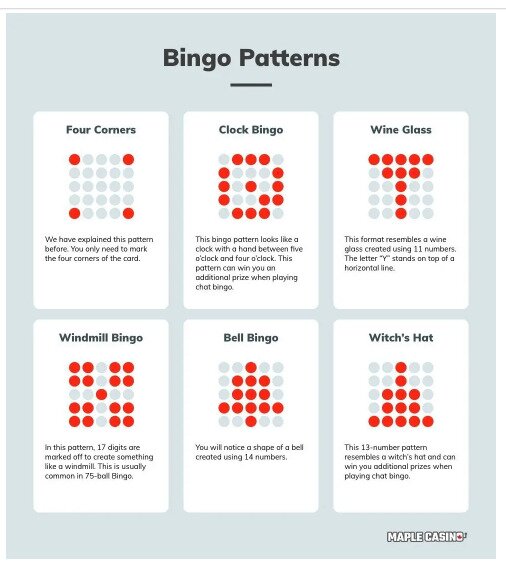
Many online bingo games—particularly 75-ball and 80-ball variants—use specialized patterns as winning conditions. Knowing them helps players understand game requirements and follow gameplay more effectively.
Standard patterns
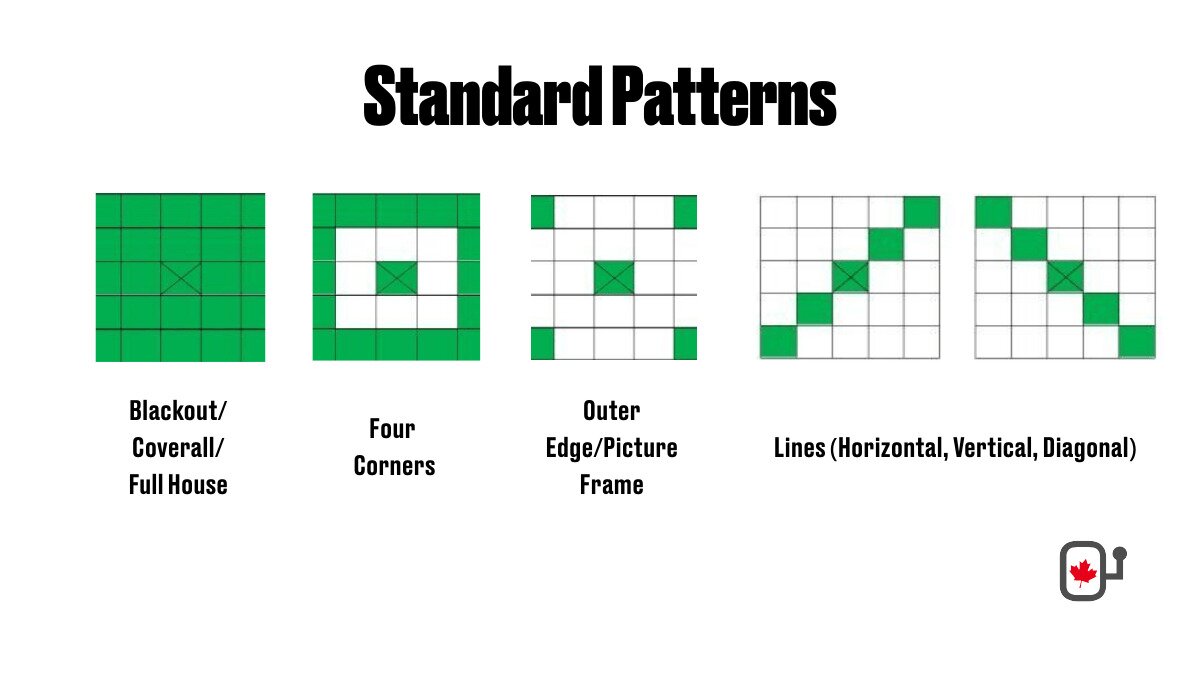
- Blackout/Coverall/Full House: Mark every number on the card. Typically the most difficult and often carries the largest prize or jackpot. In 75-ball bingo, this includes all 24 numbers plus the free space.
- Four Corners: Mark the four corners of the card. One of the quickest patterns to complete, often used in warm-up or early-prize games.
- Lines (Horizontal, Vertical, Diagonal): Complete any single line across, down, or diagonally. Most common winning pattern; diagonal lines in 75-ball pass through the free space.
- Outer Edge/Picture Frame: Mark all numbers around the card’s perimeter, leaving the interior unmarked. Requires more time and planning.
Letter & number patterns
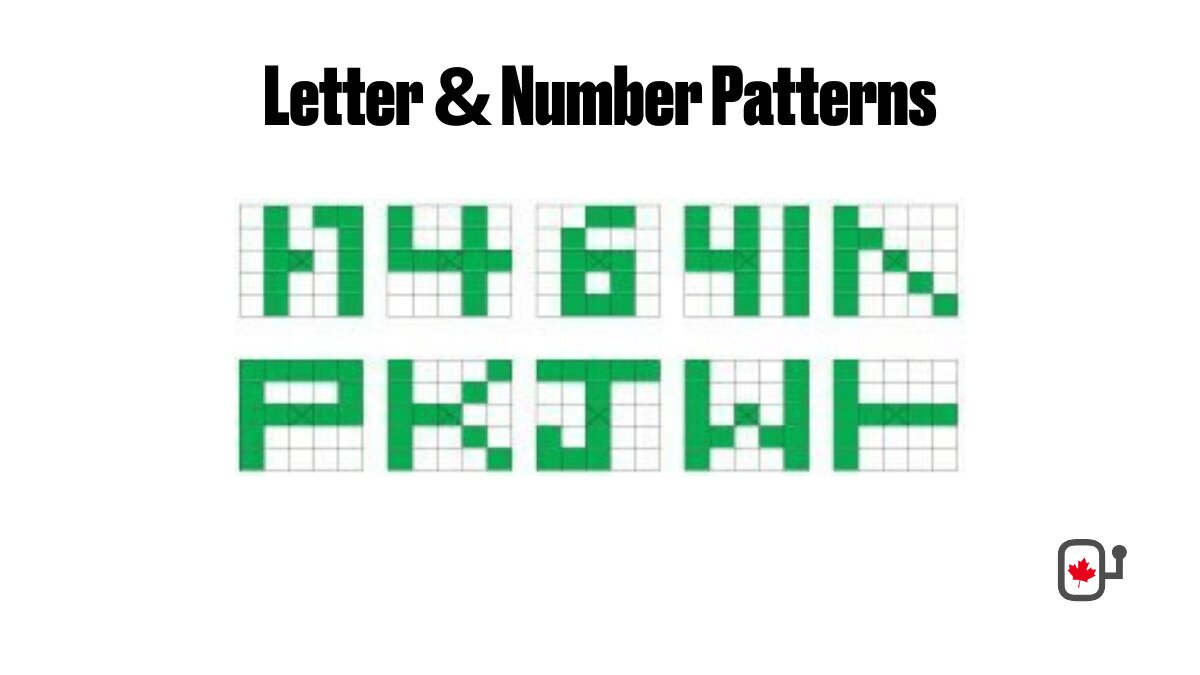
Some 75-ball games use patterns forming letters or numbers:
- Letter Patterns: Form shapes like T, L, X, or the letters in BINGO. Difficulty varies by how many numbers must be marked.
- Number Patterns: Form numerical shapes. “Crazy” variations rotate the pattern 90 degrees, increasing recognition difficulty.
Shape patterns
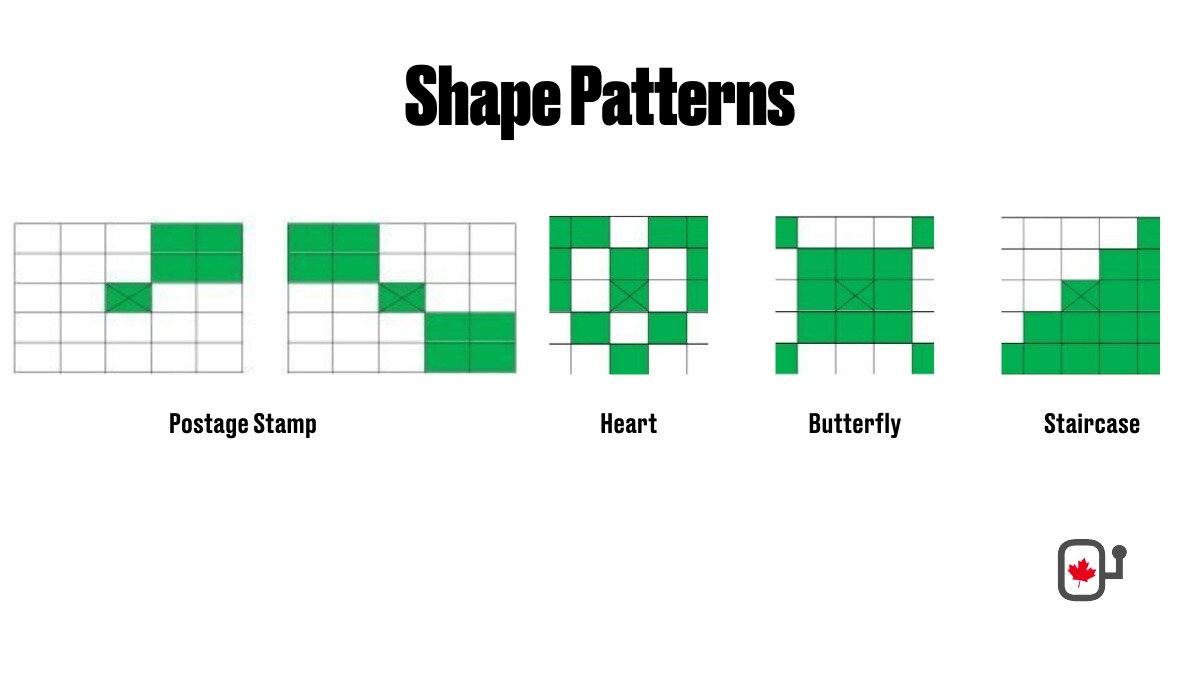
- Checkerboard: Alternate numbers to create a checkerboard look, including corners.
- Postage Stamp / Double Stamp: 2×2 blocks in one or two corners; double stamp is harder.
- Kite: Shapes can be small (fewer numbers) or large (cover more of the card).
- Butterfly, Heart, Lucky Clover, Staircase: Complex patterns forming recognizable shapes, typically covering large portions of the card and taking longer to complete.
Themed patterns
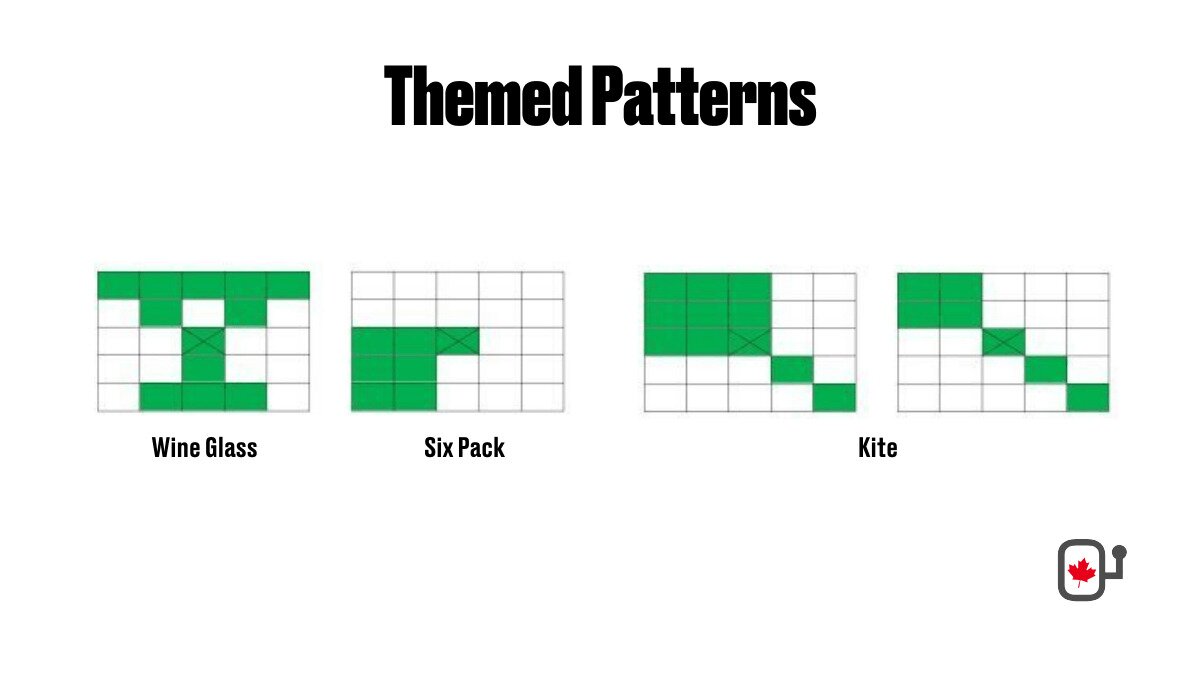
- Wine Glass, Six Pack: Novelty patterns used in themed rooms or special events.
Pattern complexity and game selection
Simple patterns finish quickly, offering shorter games and smaller prizes while complex patterns take longer to complete but come with potentially larger prizes. Pattern difficulty does not affect your odds relative to other players. Some patterns are easier to track visually, which matters if you play multiple cards or avoid using auto-daub.
Bingo Lingo: Terms You Should Know
| Term | Definition |
| Caller | The person or automated system that announces the numbers during the game. In online play, this is typically an automated voice or text display, though some live-hosted games feature human callers. |
| Dauber | A marker used to mark called numbers on a card. In online rooms, this is a digital function that highlights or marks numbers automatically (auto-daub) or manually when clicked. |
| Free Space | The center square on a 75-ball card that is automatically marked and counts toward any pattern passing through that position. Other variants typically don’t include free spaces. |
| House | Another term for the site or casino hosting the game. “Full house” also refers to marking all numbers on a card (coverall/blackout). |
| Split Pot | A game where the prize money is divided among multiple winners who complete the pattern simultaneously. This is common when several players win on the same number call. |
| Flash Board | An electronic display showing the numbers that have been called during the current game. Online interfaces typically display this information prominently on screen. |
| Speed Bingo | Fast-paced games with quicker number calls and shorter sessions, typically referring to 30-ball games or other rapid-play variants. |
| Eyes Down | A traditional call signaling that the game is about to begin and players should focus on their cards. Online, this is often displayed as a countdown or “game starting” message. |
| One to Go (1TG) | A player is one number away from winning. Some online rooms allow players to announce this in chat, creating anticipation as the game nears completion. |
| Chat Game | Mini-games played within a room’s chat feature, often hosted by chat moderators. These typically award small prizes for answering trivia, completing challenges, or participating in chat activities. |
| Pre-buy | Purchasing cards for upcoming games in advance. This allows players to secure spots in popular games without needing to be online when the game starts. |
| Progressive Jackpot | A jackpot that increases over time as a portion of ticket sales is added to the prize pool. Progressive jackpots are typically awarded for completing difficult patterns within a limited number of calls. |
| Coverall | Another term for marking all numbers on a card, also called full house or blackout. This is typically the highest-value winning pattern. |
Most Popular Bingo Calls
Traditional halls use colourful nicknames for called numbers, based on rhymes, visual appearance, or cultural references. Online play typically displays numbers digitally without these calls, but understanding them provides cultural context and enhances the experience in live-hosted online games or chat rooms.
These calls originated in UK halls and have become part of the culture globally, though their use varies by region and platform:
- 1-10: Kelly’s Eye (1), One Little Duck (2), Cup of Tea (3), Knock at the Door (4), Man Alive (5), Half a Dozen (6), Lucky Seven (7), Garden Gate (8), Doctor’s Orders (9), Downing Street (10)
- 11-20: Legs Eleven (11), One Dozen (12), Unlucky for Some (13), Valentine’s Day (14), Young and Keen (15), Sweet 16 and Never Been Kissed (16), Dancing Queen (17), Coming of Age (18), Goodbye Teens (19), One Score (20)
- 21-30: Key of the Door (21), Two Little Ducks (22), Thee and Me (23), Two Dozen (24), Duck and Dive (25), Pick and Mix (26), Gateway to Heaven (27), In a State (28), Rise and Shine (29), Dirty Gertie (30)
- 31-40: Get Up and Run (31), Buckle My Shoe (32), Dirty Knee (33), Ask for More (34), Jump and Jive (35), Three Dozen (36), More Than Eleven (37), Christmas Cake (38), 39 Steps (39), Life Begins (40)
- 41-50: Time for Fun (41), Winnie the Pooh (42), Down on Your Knees (43), Droopy Drawers (44), Halfway There (45), Up to Tricks (46), Four and Seven (47), Four Dozen (48), PC (49), Half a Century (50)
- 51-60: Tweak of the Thumb (51), Danny La Rue (52), Stuck in a Tree (53), Clean the Floor (54), Snakes Alive (55), Shotts Bus (56), Heinz Varieties (57), Make Them Wait (58), Brighton Line (59), Five Dozen (60)
- 61-70: Baker’s Bun (61), Turn the Screw (62), Tickle Me 63 (63), Red Raw (64), Old Age Pension (65), Clickety Click (66), Stairway to Heaven (67), Saving Grace (68), Favourite of Mine (69), Three Score and Ten (70)
- 71-80: Bang on the Drum (71), Six Dozen (72), Queen Bee (73), Hit the Floor (74), Strive and Strive (75), Trombones (76), Sunset Strip (77), 39 More Steps (78), One More Time (79), Eight and Blank (80)
- 81-90: Stop and Run (81), Straight on Through (82), Time for Tea (83), Seven Dozen (84), Staying Alive (85), Between the Sticks (86), Torquay in Devon (87), Two Fat Ladies (88), Nearly There (89), Top of the Shop (90)
Online platforms typically don’t use these traditional calls unless they’re specifically themed around hall culture or feature live human callers.
Quick Tips (Based on Real Testing)
While Bingo is a game of chance, players can still make informed decisions about certain factors that affect their experience and, to a limited degree, their probability of winning. These considerations operate within narrow margins and cannot overcome the house edge or guarantee positive results.
- Buy cards early and check prize splits: Card sales often close 5–15 seconds before the game starts. This isn’t always obvious so don’t wait until the last moment to buy cards. Also check whether prizes are shared: if multiple players win simultaneously, the payout may be much smaller than advertised.
- Balance timing against prize size: Off-peak games offer better individual odds due to fewer players, but usually come with smaller prize pools. Choose a game based on what matters more to you.
- Manage your card count carefully: Auto-daub works reliably, but managing 8+ cards can get confusing, making it hard to track how close you are to winning. Start with fewer cards and scale up only if you’re comfortable.
- Read bonus terms and verify jackpot rules upfront: Bonus contributions vary widely (10%–100%) and are often buried in fine print. Similarly, jackpot conditions — including required patterns and call limits — may not be clearly displayed. Check both before you start playing.
Responsible Gambling Considerations
Managing your play in online bingo requires more than just knowing the rules—it requires active self-regulation. The social atmosphere of chat rooms and the rapid pace of modern variants can sometimes mask the speed at which funds are spent.
For guidance on setting limits, recognizing the signs of problem gambling, and finding professional support resources, please visit our Responsible Gambling Resource Page.
More Related Guides
Our experts have created detailed casino guides to help you play smarter and make the most of your online gaming experience
- Glossary of Casino Terms
- How to Play Slots
- Casino Loyalty Points
- How to KYC Verify Your Casino Account
FAQ
What is the best bingo strategy?
Sadly, no single strategy can guarantee a winning bingo session because each number has an equal chance of hitting. However, you can boost your winning odds by learning online bingo rules and choosing games with high payout rates.
Are online bingo results rigged?
Not on licensed sites. Regulated platforms use Random Number Generators that are audited by third-party agencies to ensure every draw is random and fair.
Can I play bingo on mobile?
Yes. Most bingo sites use HTML5, so you can play in your mobile browser. Many operators also offer dedicated iOS and Android apps for a smoother experience.
Is Online Bingo safe?
Yes, provided you play on licensed and regulated platforms. To ensure your safety, only use sites overseen by official gaming authorities.