

Curaçao-licensed online casinos are widely accessible to Canadian players, but the level of player protection, dispute handling, and regulatory oversight differs from provincially regulated platforms. On this page, we explain what a Curaçao license actually covers, how enforcement works in practice, and which risks and limitations Canadian players should be aware of before registering.
Tested Casinos with a Curaçao License
Maple Casino is free to use. We independently review online casinos based on licensing, gameplay, bonuses, payments, and withdrawals. If you sign up through a link on our site, we may earn a commission. This supports our testing and updates and does not influence which casinos we review or how they are ranked.
Curaçao Gambling License Overview
Curaçao is a constituent country of the Kingdom of the Netherlands, located in the Caribbean. Since the late 1990s, it has issued gambling licenses to online operators. The licensing framework has evolved over time, and the current structure involves the Curaçao Gaming Control Board, which oversees the issuance and monitoring of licenses.
Historically, Curaçao operated a master license system, where a small number of master license holders could issue sub-licenses to individual operators. This structure has been subject to reform, and the current framework aims to consolidate oversight under a single regulatory body. However, the transition has been gradual, and some operators may still display legacy license references.
For Canadian players, this means that the level of oversight and the specific regulatory requirements can vary depending on when an operator obtained its license and which licensing entity issued it. It is important to verify the license details provided by an operator and to understand that Curaçao licensing does not necessarily equate to the same level of regulatory scrutiny as jurisdictions such as Malta or the UK.
Maple Casino note: When reviewing a Curaçao-licensed operator, we check the footer for license details, record the license number, and confirm the legal entity name. We also review the terms for withdrawal limits, verification requirements, and bonus conditions. This helps us assess transparency and identify potential friction points.
Quick Pros and Cons
Pros
- Broader operator access (more sites available to Canadian players)
- Often accept a wide range of payment methods (including crypto)
- May offer generous bonuses and promotions
- Lower barriers to entry for new operators
Cons
- Variable oversight standards (protections depend on operator practices)
- Dispute options can be limited compared with some regulators
- Responsible gambling tools may not be mandatory
- Withdrawal limits and processing times vary by operator
Who Curaçao-licensed sites may suit / may not suit
- May suit: Players in provinces without regulated iGaming markets; players seeking broader game selection; players comfortable evaluating operator practices
- May not suit: Ontario residents (provincially regulated options available); players seeking mandatory dispute escalation pathways; players prioritising strict regulatory oversight
What Curaçao licensing often means in practice
Curaçao licensing typically involves broader operator access and variable standards. Operators may rely on their own policies and third-party audits (such as RNG certification from independent labs) rather than mandatory regulatory standards. This means that player protections, dispute pathways, and responsible gambling tools can vary significantly between operators.
For Canadian players, this means that choosing a Curaçao-licensed operator requires careful evaluation of the operator’s practices, rather than relying solely on the license itself. Transparency in terms, clear withdrawal policies, and accessible support are key indicators of a reliable operator.
Encryption and data protection: What SSL/TLS does (and doesn’t do)
SSL/TLS encryption is a transport layer security protocol that encrypts data transmitted between a player’s device and the casino’s server. This protects sensitive information (such as login credentials and payment details) from interception during transmission.
However, SSL/TLS alone does not guarantee overall account security. Account security also depends on the operator’s practices, including password policies, two-factor authentication (2FA) availability, and data storage security. Players should check whether an operator offers 2FA and should use strong, unique passwords for their accounts.
For more information on SSL/TLS, see the IETF TLS documentation and OWASP transport layer protection guidance.
Fairness and Game Audits: RNG Testing and Independent Labs
RNG (Random Number Generator) testing is conducted by independent testing labs to verify that game outcomes are random and unbiased. Common testing labs include eCOGRA, Gaming Laboratories International (GLI), and iTech Labs.
Operators may display certification seals from these labs, but players should verify that the certification is current and applies to the games they are playing. Not all Curaçao-licensed operators undergo regular third-party audits, so the presence of certification seals is a positive indicator but not a guarantee.
For more information on RNG testing, see eCOGRA standards pages and GLI informational pages.
Verification and Withdrawals: What to Expect
KYC (Know Your Customer) and AML (Anti-Money Laundering) checks are standard procedures at most online casinos. These checks typically involve uploading identification documents (such as a passport or driver’s license) and proof of address (such as a recent utility bill).
Verification is usually required before the first withdrawal. The verification process can take a few hours to a few days, depending on the operator. Once verification is complete, withdrawal processing times vary by operator and payment method.
Players should check the operator’s terms for withdrawal limits, processing times, and any fees. Some operators may impose daily, weekly, or monthly withdrawal limits, and some payment methods may incur fees.
For more information on AML/KYC rationale, see FATF guidance summaries.
Tested and Reviewed Curaçao-licensed Online Casinos
1. BlueChip Casino
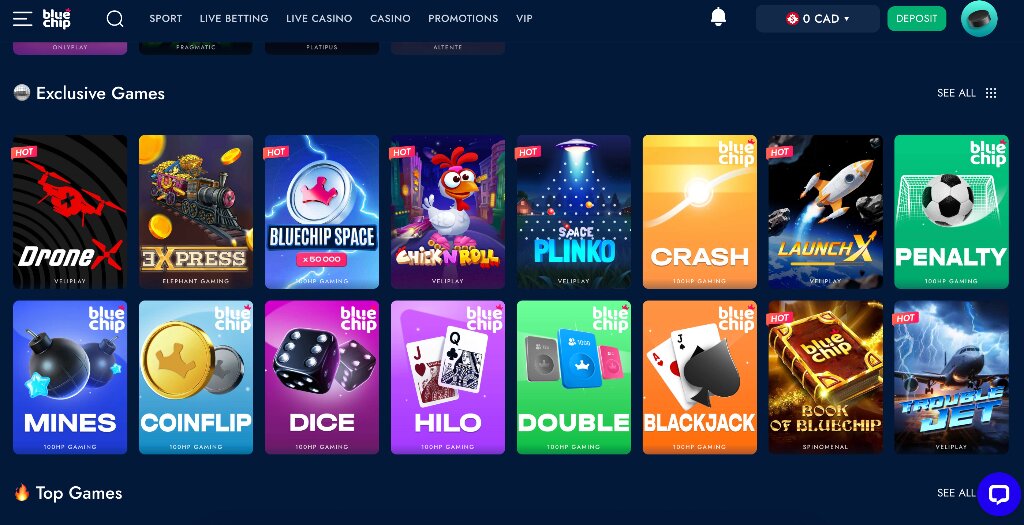
BlueChip Casino operates under a Curaçao license and is accessible to international players. The operator displays its license information in the site footer and lists the legal entity responsible for operations, providing a clear level of regulatory transparency.
Notable features:
- Operates under a Curaçao Gaming Control Board license
- License number displayed in the website footer
- Legal entity (XZ Solutions B.V.) publicly listed
Considerations:
- Curaçao regulation offers lighter player protection than EU licenses
- No two-factor authentication (2FA) available for added account security
- License Transparency Indicators Payment Methods Withdrawal Time
- Curaçao eGaming License number and legal entity listed Cards, crypto, e-wallets Varies by payment method
2. VegaZone Casino
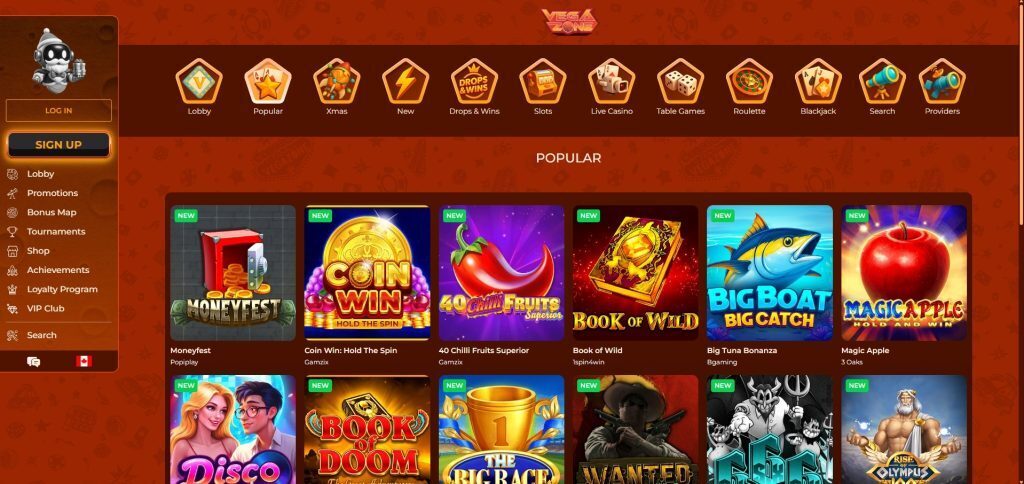
VegaZone Casino is a Curaçao-licensed online casino that provides clear withdrawal terms and displays its license number on-site. The platform outlines key payment conditions in its terms section, allowing players to review withdrawal rules before registering.
Notable features:
- Licensed under Curaçao eGaming
- Withdrawal terms clearly outlined on the site
- License number visible for verification
Considerations:
- Withdrawal processing times may be longer than EU-licensed casinos
- Player protection standards are more limited
- License Transparency Indicators Payment Methods Withdrawal Time
- Curaçao eGaming License number and withdrawal terms listed Cards, crypto, e-wallets Varies depending on method
3. OnlyWin Casino
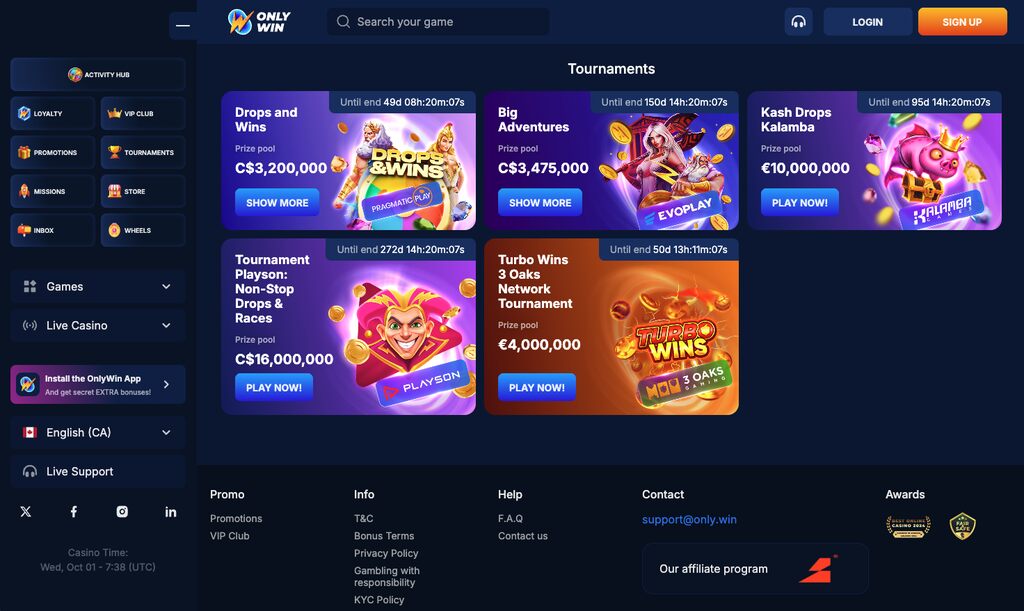
OnlyWin Casino operates under a Curaçao license and provides players with access to license and company details directly on the website. The operator lists its legal entity and license number, which can be verified through the Curaçao regulator.
Notable features:
- Curaçao-licensed operator
- License number and legal entity clearly stated
- Simple site structure focused on slots and casino games
Considerations:
- Regulatory oversight is less strict than MGA or UKGC
- Limited responsible gambling tooling compared to EU operators
- License Transparency Indicators Payment Methods Withdrawal Time
- Curaçao eGaming License number and legal entity listed Cards, crypto, e-wallets Method-dependent
Payment Considerations for Canadians Playing at Curacao Casinos
| Payment method | Typical availability | Typical verification needs | Key risks/notes |
| Interac | Common at Canadian-friendly operators | Standard KYC (ID, proof of address) | Processing times vary; check operator terms |
| Cards (Visa, Mastercard) | Widely available | Standard KYC | Some banks may decline gambling transactions |
| E-wallets (Skrill, Neteller) | Common | E-wallet account verification + casino KYC | Fees may apply; check e-wallet and casino terms |
| Crypto (Bitcoin, Litecoin) | Increasingly common | Wallet address verification + casino KYC | Volatility, network fees, transaction irreversibility |
| Bank transfer | Available but slower | Standard KYC | Longer processing times; fees may apply |
- Check for fees (deposit fees, withdrawal fees, currency conversion fees)
- Confirm CAD support (some operators may only support USD or EUR)
- Verify withdrawal method matching (some operators require withdrawals to the same method used for deposit)
How to Choose a Curaçao-licensed Operator: A Step-by-Step Checklist
- Check license details: Locate the footer and record the license number, issuing authority, and legal entity name.
- Verify the license: Cross-reference the license number with available regulator resources where possible.
- Review terms and conditions: Check for withdrawal limits, verification requirements, and bonus conditions.
- Confirm payment methods: Verify that your preferred payment method is available and check for fees.
- Test support availability: Contact support via live chat or email to assess response times and helpfulness.
- Check responsible gambling tools: Confirm that deposit limits, self-exclusion, and session reminders are available.
- Review game selection: Verify that the games you want to play are available and check RTP disclosure.
- Read player reviews: Check independent review sites (including Maple Casino) for player feedback.
- Start with a small deposit: Test the deposit and withdrawal process with a small amount before committing larger funds.
Curaçao vs Other Licensing Jurisdictions: What Changes for Players
Curaçao licensing differs from other jurisdictions in terms of oversight style, complaint mechanisms, and typical license disclosure. The table below compares Curaçao to the Malta Gaming Authority (MGA), the UK Gambling Commission (UKGC), and the Kahnawake Gaming Commission.
| Jurisdiction | Oversight style | Complaint mechanisms | Suitability for Canadian players |
| Curaçao | Variable standards; reliance on operator policies and third-party audits | Operator support first; ADR varies; regulator complaint channels where applicable | Common offshore option; protections vary by operator |
| Malta Gaming Authority (MGA) | Comprehensive regulatory framework; mandatory player protection standards | Operator support, ADR (e.g., eCOGRA, IBAS), MGA complaint escalation | Strong protections; clear dispute pathways |
| UK Gambling Commission (UKGC) | Strict regulatory standards; mandatory responsible gambling tools | Operator support, ADR, UKGC complaint escalation | High protections; may restrict Canadian access |
| Kahnawake Gaming Commission | Established oversight; focus on technical standards and dispute resolution | Operator support, Kahnawake complaint process | Canadian-friendly; clear complaint pathways |
FAQ
Are Curaçao casinos legal in Canada?
Yes, Curaçao-licensed casinos are generally accessible to Canadian players, although gambling is regulated at the provincial level. A Curaçao license does not mean a casino is regulated in Canada, so players should verify the operator’s license, terms, and player protection measures before signing up.
What games can I find at Curaçao casinos?
This depends on where you choose to play. You’ll usually find online slots, progressive jackpot slots, table games, and live dealer titles at these destinations.
Are Curaçao casinos crypto-friendly?
Many Curaçao casinos accept cryptocurrencies, with popular options including Bitcoin, Litecoin, Dogecoin, and Tether.