


Online poker platforms vary significantly in the types of poker games they offer, the quality of their software, and the availability of tournaments or multiplayer tables. While many online casinos advertise poker as part of their game libraries, the depth of their poker offering can differ considerably.
This page evaluates online casinos available to Canadian players based specifically on their poker offerings, rather than general casino features. The platforms listed were assessed for factors that directly affect poker gameplay, including variant availability, table limits, tournament structures, software responsiveness, and banking methods commonly used by poker players.
Trusted Sites Offering Online Poker Games
Disclaimer: Maple Casino is free to use. If you choose to register through a link in this table, we may receive a commission. That revenue helps fund ongoing testing and updates, and it does not influence which casinos we cover, or how they are evaluated.
Methodology: How Poker Rooms Were Evaluated
Each casino listed on this page was evaluated based on poker-specific gameplay factors rather than overall casino quality. Testing methodology focused on elements that directly affect poker players, including gameplay performance, available variants, and tournament structures.
- Poker variant availability: Number and type of poker games offered, including Texas Hold’em, Omaha, Caribbean Stud, Three Card Poker, and video poker variants.
- Table limits and accessibility: Minimum and maximum bet ranges across cash games and tournaments, and whether limits accommodate recreational or higher-stakes players.
- Tournament structures: Availability of Multi-Table Tournaments (MTTs), Sit & Go formats, and Progressive Knockout (PKO) events, including frequency and buy-in ranges.
- Software responsiveness: Table load times, interface clarity, hand history access, and multi-table functionality where applicable.
- Live dealer quality: For live poker games, dealer professionalism, stream stability, and interaction options were observed.
- Poker-specific banking: Withdrawal processing times for poker winnings, table deposit requirements, and payment method suitability for frequent transactions.
- Mobile compatibility: The functionality of the game when played on Android or iOS was assessed and tested for lag and responsiveness.
Testing involved playing multiple hands across several poker formats at each casino and observing gameplay conditions during both peak evening hours and quieter off-peak periods. Tournament lobbies were also reviewed for active events and scheduled tournaments.
Popular Online Poker Game Variants Tested
Online poker includes multiple game types, each with different rules, strategies, and payout structures. The most common variants available at Canadian-facing casinos are outlined below.
Caribbean Stud Poker
Caribbean Stud Poker feels familiar to poker fans but plays more like a traditional casino table game. Instead of competing against other players, you’re up against the dealer, which keeps the pace steady and easy to follow. With five cards dealt and one of the dealer’s cards visible, Canadian players get just enough information to make a strategic call without overcomplicating the round.
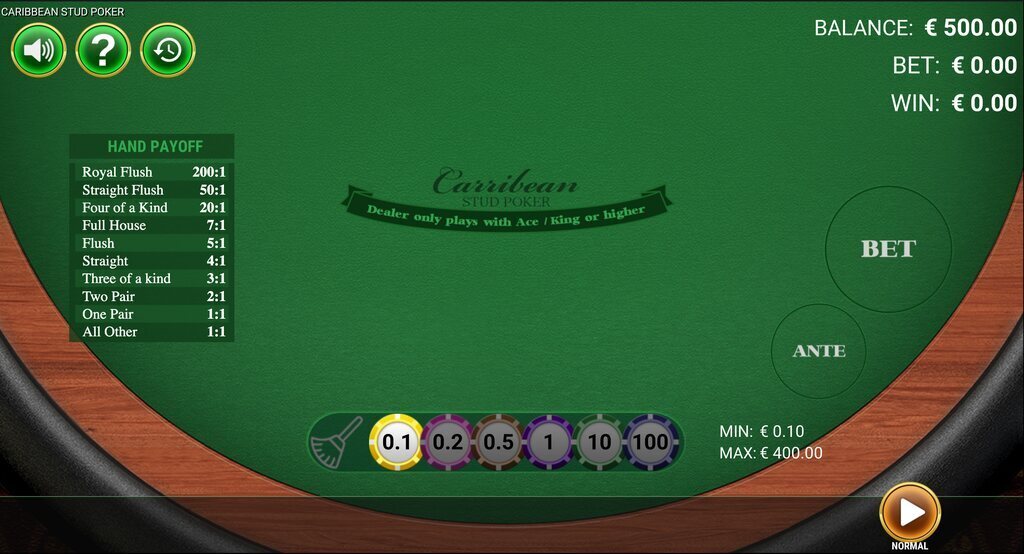
Payout potential: Solid payouts are possible for strong hands, and many tables feature a progressive jackpot side bet that can pay out big on rare hands like a Royal Flush.
The trade-off: The game offers fewer strategic decisions than traditional poker, and the progressive jackpot odds are extremely long, meaning most rounds play out with modest returns.
Casino Hold’em
Casino Hold’em brings the familiar feel of Texas Hold’em to the casino floor, but with a simple twist: you’re playing against the dealer instead of a table full of opponents. You start with two hole cards while five community cards are revealed across the flop, turn, and river, giving the game a rhythm that poker fans will instantly recognize. After the flop, you decide whether your hand is strong enough to continue, adding a light strategic element without slowing the pace too much.
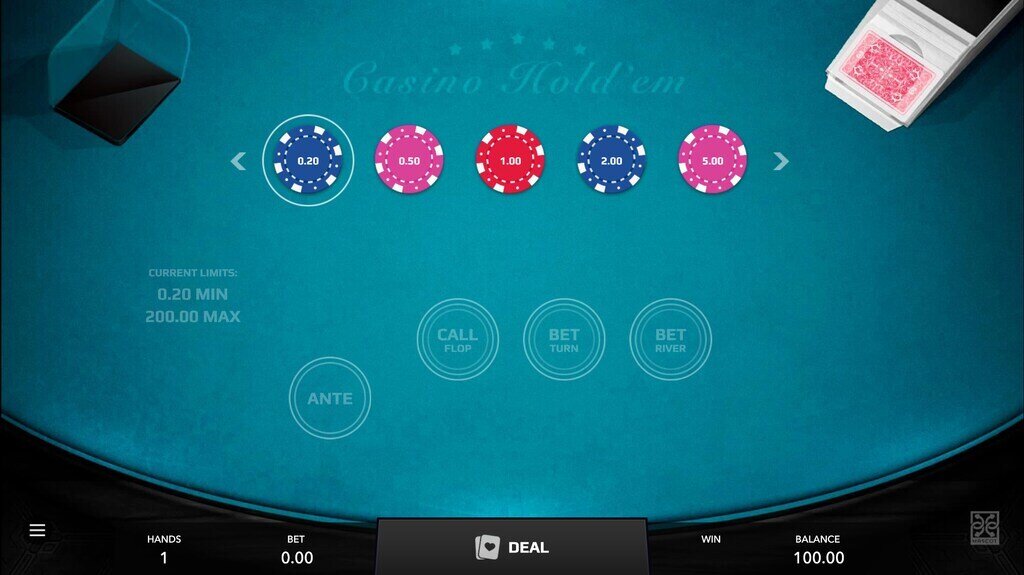
Payout potential: Winning hands follow a standard poker ranking system, with stronger combinations like flushes or full houses paying more through the bonus payout table.
The trade-off: The dealer must qualify with at least a pair of fours, so some winning hands only return the ante rather than the full payout, which can make certain rounds feel less rewarding.
Three Card Poker
Three Card Poker keeps things quick and easy, making it a popular choice for players who want a poker-style game without long rounds or complex decisions. You’re dealt three cards and go head-to-head with the dealer, with the option to stick with the Ante-Play bet or try the Pair Plus side bet for extra action. The simple format makes it easy for Canadian players to jump in, even if they’re new to table games.
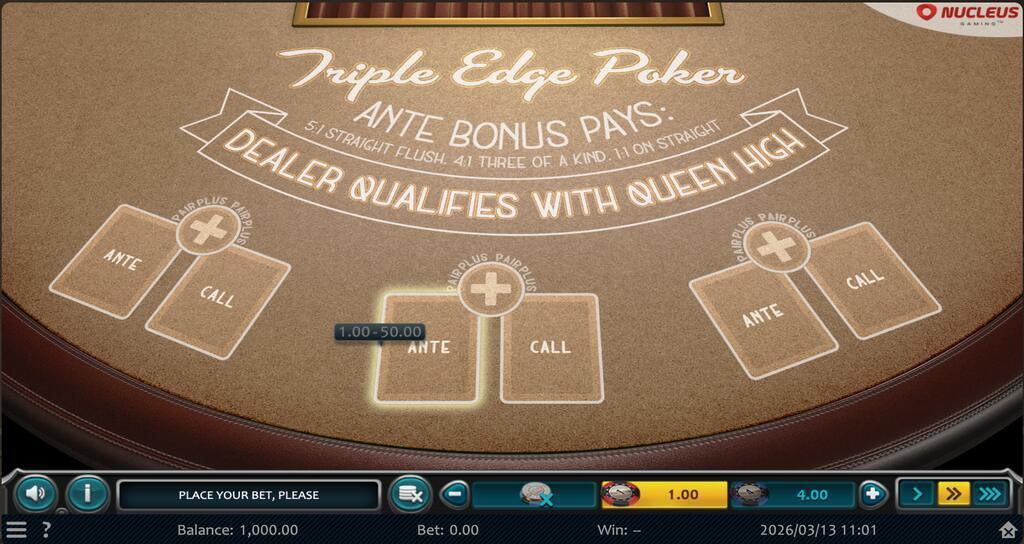
Payout potential: Strong three-card hands like straights, flushes, or three of a kind can deliver solid returns, especially through the Pair Plus bet which pays regardless of the dealer’s hand.
The trade-off: With only three cards in play, big hands are fairly rare, and the fast pace can lead to quick losses if luck isn’t on your side.
Video Poker
Video Poker blends elements of classic poker with the simplicity of a slot-style machine. You’re dealt five cards and decide which ones to keep and which to replace, aiming to finish with the best possible hand. It’s a relaxed, solo experience that many Canadian players enjoy for its steady pace and clear rules.
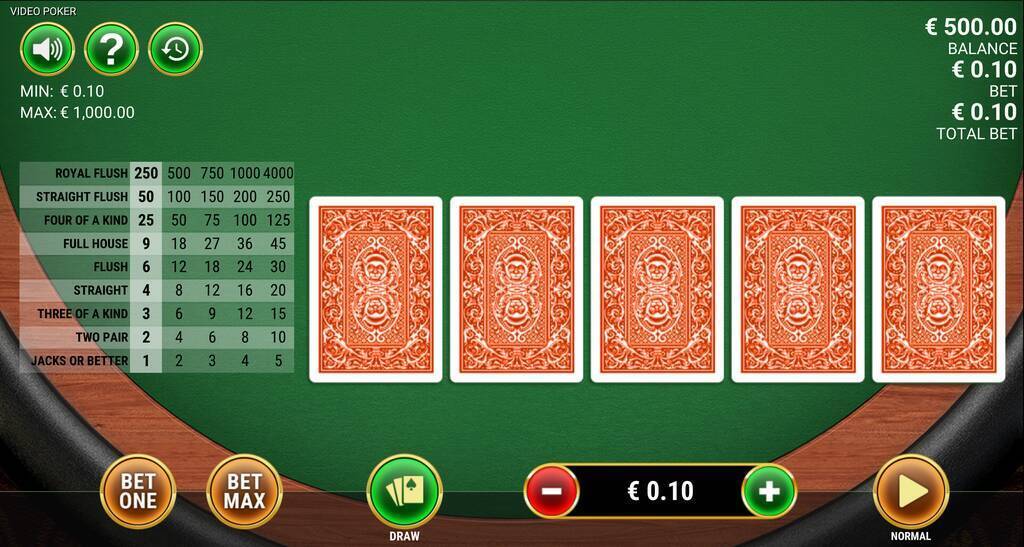
Payout potential: Some variants, such as Jacks or Better or Deuces Wild, can offer strong returns when played with the right strategy, with certain pay tables reaching very high RTP levels.
The trade-off: While strategy plays a role, the gameplay can feel repetitive over time, and smaller hands often lead to modest payouts unless you hit one of the top combinations.
Casino Hold'em: What the October Playtest Reveals

Welcome Bonus:
100% Up To $2,000
+ 100 Free Spins
- Pragmatic Play's debut live poker title; a Jackpot side bet offers a maximum win of 20,000x, paying on a flop straight, four of a kind, or straight flush
- You play a five-card hand against the dealer using two hole cards and five community cards, with AA+ and jackpot side bets placed after an ante
- After the flop you either fold and forfeit the ante, or call to see the turn and river; the shuffle and community cards stay outside your control
Poker Tournaments: Formats and Availability
Poker tournaments are structured competitions where players compete for a prize pool funded by entry fees. The most common tournament formats are outlined below.
Sit & go tournaments
Where to Play Poker Online in Canada: Casino Comparison by Game QualitySit & Go tournaments begin as soon as the required number of players register. These tournaments are typically single-table events with 6 to 10 players. Blind levels increase at set intervals, and the tournament continues until one player has all the chips. Sit & Go tournaments are faster than multi-table tournaments and require less time commitment.
Progressive Knockout (PKO) tournaments
Progressive Knockout tournaments award bounties for eliminating other players. Each player has a bounty on their head, and when a player is eliminated, the eliminating player receives half of the bounty immediately. The other half is added to the eliminating player’s own bounty. This format rewards aggressive play and creates additional prize opportunities beyond the main prize pool.
Multi-Table tournaments (MTTs)
Multi-Table Tournaments involve multiple tables and can include hundreds or thousands of players. Blind levels increase at regular intervals, and tables are consolidated as players are eliminated. MTTs typically last several hours and require sustained focus and strategy adjustments as the tournament progresses.
None of the casinos tested during this review offered dedicated MTT schedules or Sit & Go lobbies. Players seeking tournament poker may need to use poker-specific platforms rather than general online casinos.
Player Pool and Table Activity
One challenge with poker offered through online casinos is the limited player pool compared with dedicated poker networks.
During testing, multiplayer tables were often sparsely populated outside peak evening hours. This can affect the availability of Sit & Go tournaments and the speed at which cash game tables fill.
Casinos that rely primarily on video poker or live dealer poker are less affected by this issue because those formats do not require large numbers of active players.
Players interested in regular multiplayer tournaments should verify whether the casino participates in a shared poker network or offers a dedicated tournament lobby.
Where to Play Poker Online in Canada: Casino Comparison by Game Quality
The following casinos were selected based on poker game availability and observed poker room features. Each entry includes poker-specific details such as the number of poker titles, tournament availability, and notable poker variants. This is not a ranking of overall casino quality; it reflects poker-specific suitability only.
1. Wyns Casino – Best overall new poker site
- Poker titles available: 40
- Video poker availability: Yes, including several classic draw-style variants
- Live poker availability: Limited selection compared to other live table games
- Notable poker game: Hold & Flip Poker Frenzy
- Tournament poker: Not available during testing
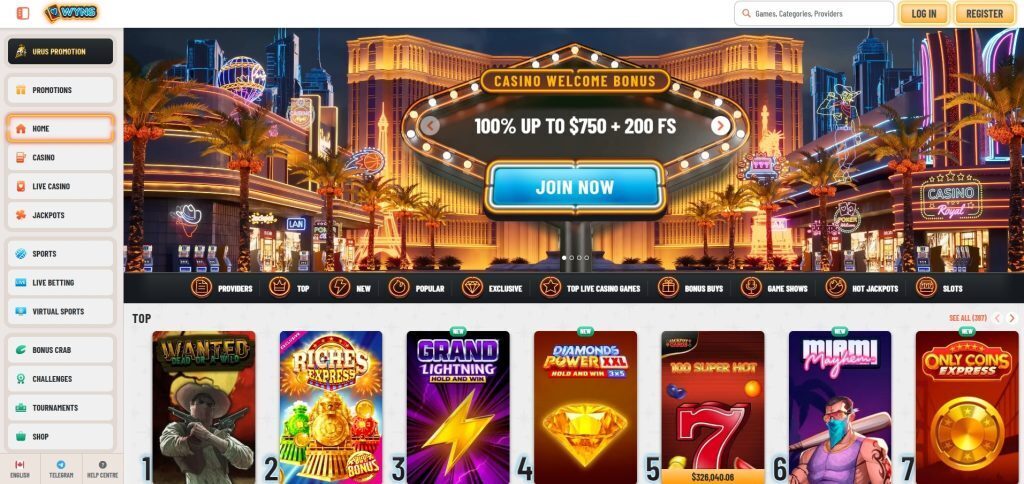
Testing Notes:
During testing, Wyns Casino leaned heavily toward video poker rather than traditional poker rooms. The poker lobby loaded quickly and offered a good range of RNG and video poker titles that were easy to access on both desktop and mobile. Hold & Flip Poker Frenzy stood out for its fast rounds and modern twist on classic poker mechanics. However, we didn’t find multi-table tournaments or dedicated poker rooms, making the site better suited to casual video poker play.
2. OnlyWin Casino – Best mobile poker experience
- Poker titles available: 36
- Video poker availability: Yes, with several classic pay-table variants
- Live poker availability: Limited selection of live tables
- Notable poker game: American Poker Gold
- Tournament poker: Not available during testing
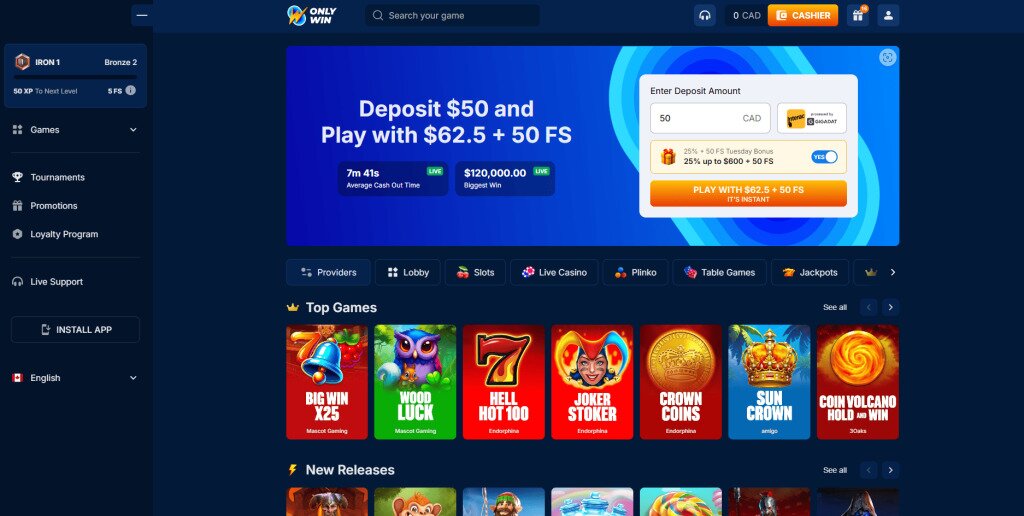
Testing Notes:
In testing, OnlyWin Casino stood out for how smoothly its poker games ran on mobile devices. The poker lobby was simple to navigate, and video poker titles loaded quickly on smaller screens without lag. American Poker Gold delivered the most polished gameplay during our session. That said, the site focuses mostly on video poker and RNG-style titles. We didn’t find Sit & Go tournaments or dedicated poker rooms, making it more suitable for casual mobile poker play.
3. Crown Gold Casino – Best for video poker variety
- Poker titles available: 21
- Video poker availability: Yes, including several traditional variants
- Live poker availability: Limited selection of live tables
- Notable poker game: Super Video Poker
- Tournament poker: Not available during testing

Testing Notes:
Our testing at Crown Gold Casino showed a smaller but very traditional video poker lineup. The lobby included familiar titles like Jacks or Better, Deuces Wild, and Aces & Faces, which loaded quickly and played smoothly. Super Video Poker delivered the most consistent experience during our session. Live poker options were present but limited, and we didn’t find tournament play or cash game lobbies. Overall, the site feels geared toward players who enjoy classic video poker rather than competitive online poker formats.
4. BetandPlay Casino – Best for modern Hold’em titles
- Poker titles available: 15
- Video poker availability: Yes
- Live poker availability: Limited
- Notable poker game: Caribbean Club Poker
- Tournament poker: Not available during testing

Testing Notes:
When we tested BetandPlay Casino, the poker section was noticeably smaller than other sites on this list. Most of the options focused on video poker and Caribbean-style table variants. Texas Hold’em Poker 3D stood out for its visual interface, offering a more interactive single-player experience. Games loaded smoothly and were easy to access from the main lobby. However, we didn’t find live poker tournaments, cash tables, or poker-specific promotions during our testing session.
5. Wildz Casino – Best for live poker and trusted play
- Poker titles available: 40+
- Video poker availability: Yes
- Live poker availability: Yes (Caribbean Stud, Casino Hold’em)
- Notable poker game: All Aces – Power Poker
- Tournament poker: Not available during testing

Testing Notes:
Wildz Casino delivered one of the more varied poker selections during testing, especially for players interested in live dealer games. The poker lobby included both video poker titles and live tables like Caribbean Stud and Casino Hold’em, which streamed smoothly during our session. All Aces – Power Poker was the most distinctive RNG title we tried. While the overall variety was solid, we didn’t see tournament formats or traditional poker rooms, so the focus remains on casino-style poker variants.
How to Play the Game Online
Poker is played with a standard 52-card deck. The objective is to create the strongest five-card hand or to force other players to fold. Hand rankings are consistent across most poker variants, with a Royal Flush being the strongest hand and a high card being the weakest.
Basic poker rules include:
- Players can check, fold, call, or raise during each betting round.
- Players must use their hole cards and community cards (in variants like Texas Hold’em) to form the best possible hand.
- The strongest hand wins the pot, unless all other players fold.
- Folded bets cannot be recovered.
Want to become a poker pro? Our guide gives you expert tips and strategies on becoming a pro poker player.
Responsible Gambling and Poker Play
Poker involves real-money wagering and carries financial risk. Players should set deposit limits, track session results, and avoid chasing losses. The following practices support responsible poker play:
- Set a fixed bankroll for poker sessions and do not exceed it.
- Track wins and losses to understand long-term performance.
- Avoid playing poker when fatigued, intoxicated, or emotionally compromised.
- Use casino-provided deposit limits and self-exclusion tools if needed.
- Recognize that poker outcomes involve both skill and variance; short-term losses do not always indicate poor play.
Players experiencing difficulty controlling their gambling should contact organizations such as the Canadian Problem Gambling Helpline (1-866-531-2600) or visit responsiblegambling.org for support resources.
Additional Casino Games for Strategic Players
Players interested in poker may also consider the following games, which involve decision-making and strategy:
- Blackjack: A card game where players aim to reach 21 without exceeding it. Basic strategy charts reduce the house edge significantly.
- Craps: A dice game with multiple betting options. Some bets, such as Pass Line and Don’t Pass, have low house edges.
- Sic Bo: A dice game with various betting options. Payouts and house edges vary by bet type.
These games do not involve direct competition with other players but require strategic decision-making to minimize the house edge.
Written and Reviewed By
FAQ - Common Questions When Playing Poker Online
Is online poker legal in Canada?
Online poker is legal for Canadian players when conducted through licensed offshore casinos. Provincial regulations vary, and some provinces operate their own online gambling platforms. Players should verify the legal status of online poker in their specific province.
What is the difference between video poker and live dealer poker?
Video poker is a single-player, RNG-based game where the player competes against a pay table. Live dealer poker is streamed in real time with a human dealer and involves competing against the dealer (not other players). Multiplayer poker, where players compete against each other, is less common at online casinos.
Do online casinos offer poker tournaments?
Some casinos offer poker tournaments, but availability is limited compared to dedicated poker networks. Tournament formats include Sit & Go, Multi-Table Tournaments (MTTs), and Progressive Knockout (PKO) events. Players should verify current tournament schedules directly with the casino.
How do I know if a poker room is fair?
Fair poker rooms use certified RNG software for video poker and employ licensed live dealers for live poker games. Players should verify that the casino holds a valid gambling license from a recognized regulator (such as Curaçao, Malta Gaming Authority, or Kahnawake Gaming Commission). Game fairness is also indicated by published RTP percentages and third-party testing certifications.
Can I play poker on my mobile device?
Most casinos offer mobile-optimized poker games, though functionality varies. Video poker typically works well on mobile devices, while live dealer poker and multiplayer poker may have limited features (such as multi-table functionality or hand history access) on mobile platforms. Players should test mobile performance before committing to a casino.
What is the best poker variant for beginners?
Texas Hold’em is considered to be the most suitable type of poker for beginners. It is the most popular variant of poker, and the rules are easy to grasp. It is always better to start from Texas Hold’em and then move on to other variations like Omaha or Seven-Card Stud.